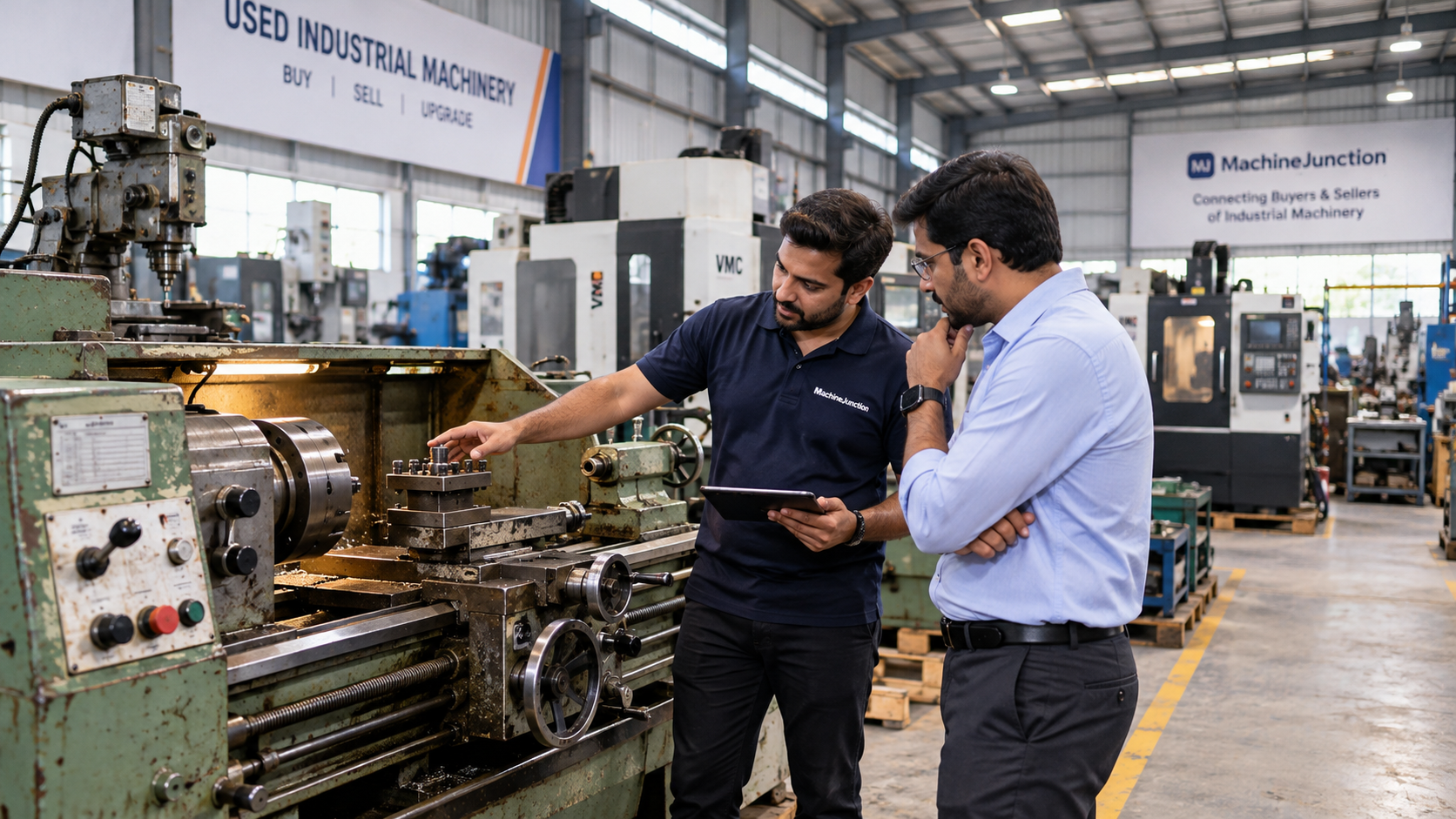
Second Hand Machine Dealers in India: How to Find the Right Supplier
Buying used industrial machinery can be a practical option for manufacturers, factory owners, workshops and small businesses looking to expand production without investing in brand-new equipment. However, finding the right second hand machine dealer in India requires more than comparing prices.
The machine's working condition, technical specifications, maintenance history, availability of spare parts and reliability of the supplier can all affect the value of your purchase.
Whether you are searching for a used lathe machine, milling machine, packaging machine, generator, compressor or other industrial equipment, it is important to evaluate both the machine and the seller before making a decision.
In this guide, we explain how to find second hand machine dealers in India, compare used machinery suppliers, inspect equipment and make a more informed purchasing decision. We also explain how MachineJunction can help you explore used industrial machinery listings across different categories.
What Are Second Hand Machine Dealers?
Second hand machine dealers are businesses or individuals who deal in previously owned industrial machinery. Depending on their business model, they may purchase used equipment for resale, act as intermediaries, refurbish machines or connect sellers with prospective buyers.
Some dealers specialise in particular machine types, such as CNC machines, conventional lathe machines or sheet metal equipment. Others deal in a wider range of industrial machinery.
When evaluating a dealer, first establish whether they own the machine, represent its owner or are facilitating the transaction. This can help you understand who is responsible for the machine's condition, documentation, inspection and sale terms.
Where Can You Find Second Hand Machine Dealers in India?
There are several ways to find suppliers of used industrial machinery. The most suitable option depends on the type of machine you need, your location, budget and the level of support required.
1. Online Used Machinery Marketplaces
Online marketplaces allow buyers to browse machinery listings, compare available equipment and identify potential sellers without visiting multiple industrial locations.
You can filter your search by machine category and review details such as photographs, specifications, location, condition and asking price where provided.
For example, MachineJunction is an online marketplace focused on used industrial machinery. Buyers can browse available listings and explore equipment across categories such as CNC machines, lathes, packaging machinery and other industrial equipment.
Start by visiting MachineJunction to browse used machinery listings.
An online listing is a starting point for your evaluation, not a substitute for checking the machine and confirming the seller's claims.
2. Industrial Machinery Dealers in Your City
Many industrial businesses operate through local dealer networks and industrial areas. Finding a dealer near your factory can make it easier to arrange a physical inspection and discuss transportation or installation.
Search for dealers in your city using the machine type you need. For example, a buyer looking for a conventional lathe should search for used lathe machine dealers, while a packaging manufacturer may need a supplier specialising in packaging equipment.
When comparing local dealers, ask about their available inventory, whether the machine can be tested, what documentation is available and whether they provide any after-sales assistance.
Do not assume that a nearby dealer will always offer the best price. Compare the total cost and condition of the available machines.
3. Industrial Networks and Manufacturer References
Industry contacts can be useful when looking for specialised or difficult-to-find machinery.
You may ask other manufacturers, maintenance professionals, production managers or industrial associations whether they know of equipment available for resale.
References can help you identify potential suppliers, but a recommendation alone does not establish that a machine is in good condition or that a transaction is safe. Carry out your own checks before purchasing.
4. Machinery Brokers and Resale Specialists
Some intermediaries help businesses find or sell used industrial machinery. They may assist with sourcing, negotiation, inspections or coordination, depending on their services.
Before engaging a broker, clarify how they are compensated, whether they represent the buyer or seller, and what responsibilities they accept.
Ask whether the machine owner will be available for inspection and who will be responsible for resolving discrepancies between the listing and the actual equipment.
Types of Used Industrial Machines You Can Find

The second hand machinery market covers a wide range of equipment. Your search will be more effective if you identify the machine category and the specifications required for your application.
CNC, VMC and HMC Machines
CNC machines and machining centres are used for precision manufacturing and metalworking. Buyers may need to evaluate the machine's controller, axis travel, spindle specifications, tool capacity, operating condition and maintenance history.
If you are specifically searching for CNC equipment, browse used CNC machines on MachineJunction.
For CNC-specific pricing and factors affecting resale value, see our Used CNC Machine Price in India 2026: Complete Buying Guide. This separate guide focuses on CNC pricing, while the present article covers supplier selection and the broader used machinery buying process.
Lathe and Milling Machines
Lathe and milling machines are commonly used in workshops, component manufacturing and engineering applications.
Before purchasing, check the machine's capacity, dimensions, spindle condition, accuracy requirements, available tooling and whether it can perform the operations you need.
Sheet Metal and Bending Machines
Sheet metal machinery may include press brakes, bending machines, shearing machines and related fabrication equipment.
Important details can include working length, material capacity, control system, tooling and the condition of safety features.
Packaging and Printing Machines
Packaging and printing equipment is used in industries such as food processing, consumer goods, pharmaceuticals and manufacturing.
Confirm the machine's intended application, production capacity, compatible materials, operating condition and compatibility with your existing production line.
Injection Moulding and Blow Moulding Machines
These machines are used in plastic processing and product manufacturing.
Depending on the model, buyers may need to examine clamping force, shot capacity, mould compatibility, control system, cooling requirements and available accessories.
Generators, Compressors and Other Industrial Equipment
Generators, compressors, pumps, forklifts, boilers, furnaces and material handling equipment are also bought and sold in the used equipment market.
The inspection requirements vary considerably by machine type. For equipment involving electrical systems, pressure, lifting or combustion, use a suitably qualified technician where necessary.
How to Choose the Right Second Hand Machine Dealer

Choosing a supplier requires checking the seller, the machine and the proposed transaction. Use the following steps to compare your options.
1. Confirm the Seller's Identity and Role
Ask for the seller's business name, contact details and relevant business information. For a high-value purchase, verify the identity of the contracting party and confirm that they are authorised to sell the equipment.
Establish whether the dealer owns the machine or is selling it on behalf of another business. If the owner is a separate party, clarify who will provide the invoice and complete the sale documentation.
Be cautious if the seller refuses reasonable verification or pressures you to make an immediate payment without providing basic details.
2. Compare More Than One Supplier
If possible, compare multiple machines and suppliers rather than choosing solely on the basis of the lowest asking price.
A useful comparison should consider:
Machine make, model and manufacturing year
Working condition and inspection results
Technical specifications and production capacity
Included tooling, accessories and documentation
Location and transportation requirements
Availability of spare parts and service support
Payment terms and any written warranty or return conditions
The best option is the machine that meets your requirements at an acceptable total cost, not necessarily the one with the lowest advertised price.
3. Ask for Detailed Machine Information
A professional listing or quotation should provide enough information to help you decide whether an inspection is worthwhile.
Request photographs of the actual machine, its nameplate, control panel, working components and any visible damage. Ask for the serial number or other identification details where appropriate.
Also ask about known faults, repairs, maintenance history, downtime and whether the machine is currently operational.
If important information is unavailable, record that uncertainty and investigate it during inspection.
4. Arrange a Physical or Technical Inspection
Whenever practical, inspect the machine before finalising the purchase. If you cannot assess it yourself, consider arranging an independent inspection by a qualified technician familiar with that equipment.
The inspection should be appropriate to the machine type and may include:
Checking the machine's overall condition
Verifying its make, model and identification details
Testing operating functions where safe and practical
Checking for unusual noise, vibration, leakage or visible damage
Reviewing available maintenance and service records
Confirming that included accessories match the agreed description
For precision machinery, a machine running briefly does not necessarily establish its accuracy or suitability for your production needs. Specific tests may be required.
Do not operate machinery without appropriate safeguards, trained personnel and safe inspection procedures.
5. Check Spare Parts and Service Availability
A low purchase price may not represent good value if the machine requires expensive repairs or parts that are difficult to source.
Before buying, investigate whether critical components are available and whether qualified technicians can service the equipment. This is particularly important for older machines, specialised controllers and discontinued models.
Estimate likely maintenance and repair costs where possible.
6. Calculate the Total Cost of Ownership
The purchase price is only one part of the cost of acquiring used machinery.
Depending on the equipment and transaction, additional expenses may include:
Inspection or technical assessment
Dismantling and loading
Transportation and unloading
Installation and commissioning
Electrical or foundation modifications
Repairs, tooling and spare parts
Operator training and routine maintenance
Compare suppliers using the estimated total cost of getting the machine safely installed and ready for your intended use.
7. Get the Commercial Terms in Writing
Before making payment, document the machine's identity, agreed price, condition, included accessories, payment schedule and handover arrangements.
Clarify who is responsible for transportation, dismantling, installation and any agreed repairs.
If a warranty, return period or testing condition is offered, make sure its scope and duration are written clearly. Do not assume that every used machine comes with a warranty.
For substantial purchases, consider appropriate legal, accounting or technical advice before committing funds.
How to Compare Used Machinery Dealers: A Practical Checklist
Use this checklist when reviewing potential suppliers.
What to check & Questions to ask...
Seller identity - Who owns the machine, and who is selling it?
Machine details - Are the make, model, year and specifications clear?
Condition - Can the machine be inspected or tested?
Documentation - Are relevant records and identification details available?
Price - What is included in the quoted price?
Additional costs - Who pays for loading, transport and installation?
Parts and service - Are essential spare parts and technicians available?
Payment - Are the payment terms clear and documented?
Handover - When and how will the machine be transferred?
A supplier who answers reasonable questions and allows suitable checks gives you more information for making a decision. However, no checklist can eliminate every risk, so verify important claims independently.
Common Mistakes to Avoid When Buying Used Machinery
Choosing Only by Price
A cheaper machine may require substantial repairs, lack essential accessories or fail to meet your production requirements. Compare condition, suitability and total cost alongside the asking price.
Skipping the Inspection
Photographs and descriptions cannot reveal every mechanical or electrical issue. Arrange an appropriate inspection before committing to a high-value purchase whenever possible.
Ignoring Machine Compatibility
Check that the machine's capacity, dimensions, power requirements, controller and tooling suit your production process. A machine in good condition may still be unsuitable for your application.
Overlooking Transportation and Installation
Heavy industrial equipment may require specialised handling, transport, foundations or electrical work. Confirm these requirements and estimate the associated costs before agreeing on the purchase.
Making an Unverified Advance Payment
Verify the seller and agreed transaction details before transferring money. Be cautious of urgent payment requests, inconsistent account details or refusal to provide documentation.
Use a documented payment process and retain relevant transaction records.
How MachineJunction Helps You Explore Used Machinery
Finding a suitable machine can take time when information is spread across different suppliers and locations. An online marketplace gives you another way to discover available equipment and compare the information provided by sellers.
MachineJunction focuses on used industrial machinery across multiple categories. Buyers can browse listings, review the information available and enquire about machines that may suit their requirements.
You can start with the MachineJunction homepage to explore available machinery or browse the CNC machines category if you are specifically looking for CNC equipment.
When you find a potentially suitable machine, use the listing as a starting point for your own verification. Confirm the current availability, machine specifications, condition, final price and seller details directly before making a purchase.
Frequently Asked Questions
1. Where can I find second hand machine dealers in India?
You can search online used machinery marketplaces, local industrial dealers, manufacturer networks and machinery resale specialists. Compare machine details, supplier information, inspection options and total purchase costs before choosing a supplier.
2. How do I verify a used machinery dealer?
Check the seller's identity and business information, establish whether they own the machine or represent its owner, request relevant documentation and inspect the equipment. For high-value transactions, consider independent technical and legal checks where appropriate.
3. Is it safe to buy second hand industrial machinery online?
Online listings can help you discover equipment, but a listing alone does not guarantee a machine's condition or a seller's reliability. Verify the seller, inspect the machine where practical, confirm the commercial terms and use a documented payment process.
4. What should I check before buying a used machine?
Check the make, model, specifications, working condition, maintenance history, available parts, included accessories, documentation and total cost of installation. The exact inspection requirements depend on the machine type.
5. Can I negotiate the price with a used machinery dealer?
You can ask whether the asking price is negotiable. Use comparable equipment, inspection findings, required repairs and transportation costs to support your discussion. Confirm any agreed changes in writing.
6. Which industrial machines can I buy second hand?
Depending on current availability, the market may include CNC machines, VMC and HMC machines, lathe and milling machines, packaging machinery, plastic processing machines, generators, compressors, forklifts and other industrial equipment.
7. Does the lowest-priced used machine offer the best value?
Not necessarily. Repair costs, missing accessories, transportation, installation, spare parts and downtime can increase the overall cost. Compare the total expected cost and whether the machine meets your production requirements.
8. What documents should I request when purchasing used machinery?
Depending on the transaction and equipment, request a written quotation or sale agreement, invoice or other proof of sale, machine identification details and available maintenance or service records. Additional documents may be appropriate for specialised or regulated equipment.
Final Thoughts
Finding the right second hand machine dealer in India starts with understanding your production requirements and carefully evaluating both the equipment and the supplier.
Compare more than one option where possible, verify machine details, arrange an appropriate inspection and account for transportation, installation and maintenance costs. Document the agreed terms before making payment.
MachineJunction provides a starting point for exploring used industrial machinery across different categories. Browse the available listings, identify machines that match your requirements and verify the details directly with the seller before finalising a purchase.
Looking for used industrial machinery? Visit MachineJunction to explore available listings.
Looking to Buy or Sell Machinery?
Browse thousands of listings or list your machine for free